One of the biggest misconceptions in enterprise AI is that the organisation building the AI should also be responsible for independently proving it works.
Think about it for a moment.
We don’t ask Microsoft to independently audit Windows.
We don’t ask AWS to independently validate an organisation’s cyber security.
We don’t ask Salesforce to certify that every CRM implementation is fit for purpose.
In every mature technology market, there is a clear distinction between the company that builds the technology and the independent organisations that validate, assess and assure it.
So why should AI be any different?
AI platform vendors have an important job to do. They build models, develop new capabilities, improve performance and innovate at an incredible pace. They should absolutely test their own platforms before releasing them to customers. That testing is an essential part of developing high-quality AI.
However, their responsibility is fundamentally different from the responsibility of the organisations deploying AI.
An enterprise doesn’t just need an AI platform that works. It needs an AI platform that performs reliably within its own environment, against its own policies, data, business processes, regulatory obligations and risk appetite. It needs to understand how its AI performs over time, how changes affect outcomes, whether different models deliver better results, and whether appropriate governance controls remain effective as the system evolves.
Those questions can only be answered from the perspective of the organisation using the AI—not solely from the perspective of the AI platform vendor.
This is where an independent AI assurance platform becomes essential.
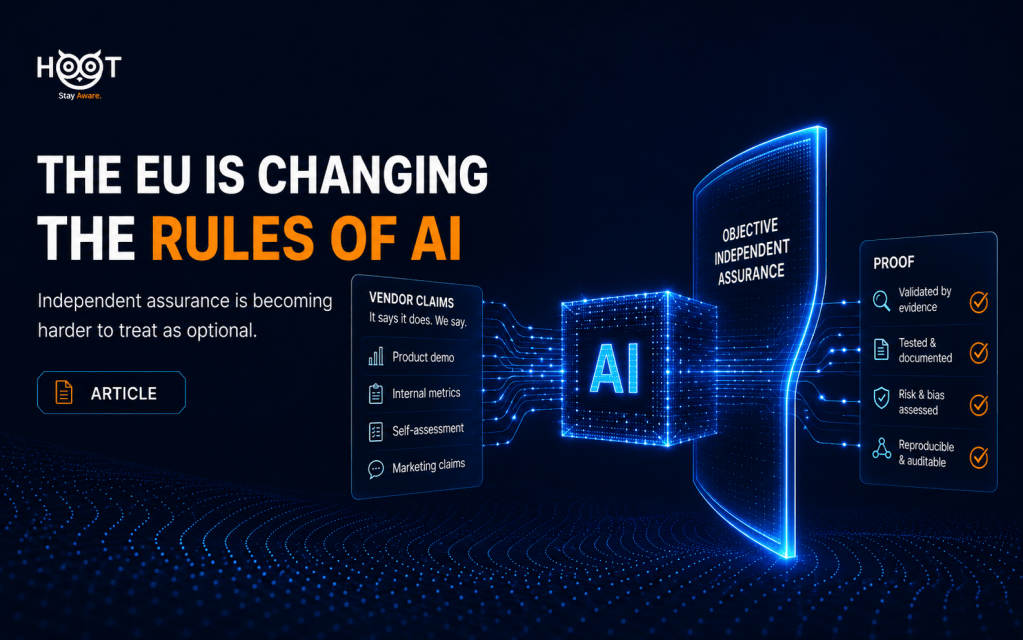
Its purpose isn’t to replace the AI platform vendor. It’s to independently evaluate how AI performs in your environment, using your use cases, your policies, your data and your success criteria. It provides objective evidence of performance, consistency, governance and ongoing quality, rather than relying solely on vendor-reported metrics.
The relationship is complementary, not competitive.
AI platform vendors build AI capabilities.
Independent AI assurance platforms validate those capabilities in the real world.
As AI becomes increasingly embedded in critical business processes, organisations won’t simply be asking, “Which AI platform should we buy?”
They’ll also be asking, “How do we know it’s performing as expected for our organisation?”
Those are two very different questions—and they deserve two different answers.