For years, software teams have relied on a simple idea of quality.
You define the correct output, write a test, and expect the same result every time.
That model worked because traditional software is deterministic.
Same input → same output.
But AI has changed that.
When you start working with generative AI systems, expected output is no longer fixed.
The same prompt can produce slightly different answers across runs.
Sometimes those answers are still correct.
Sometimes they are not.
And that creates a new kind of problem.
The Testing Model Most Teams Still Use
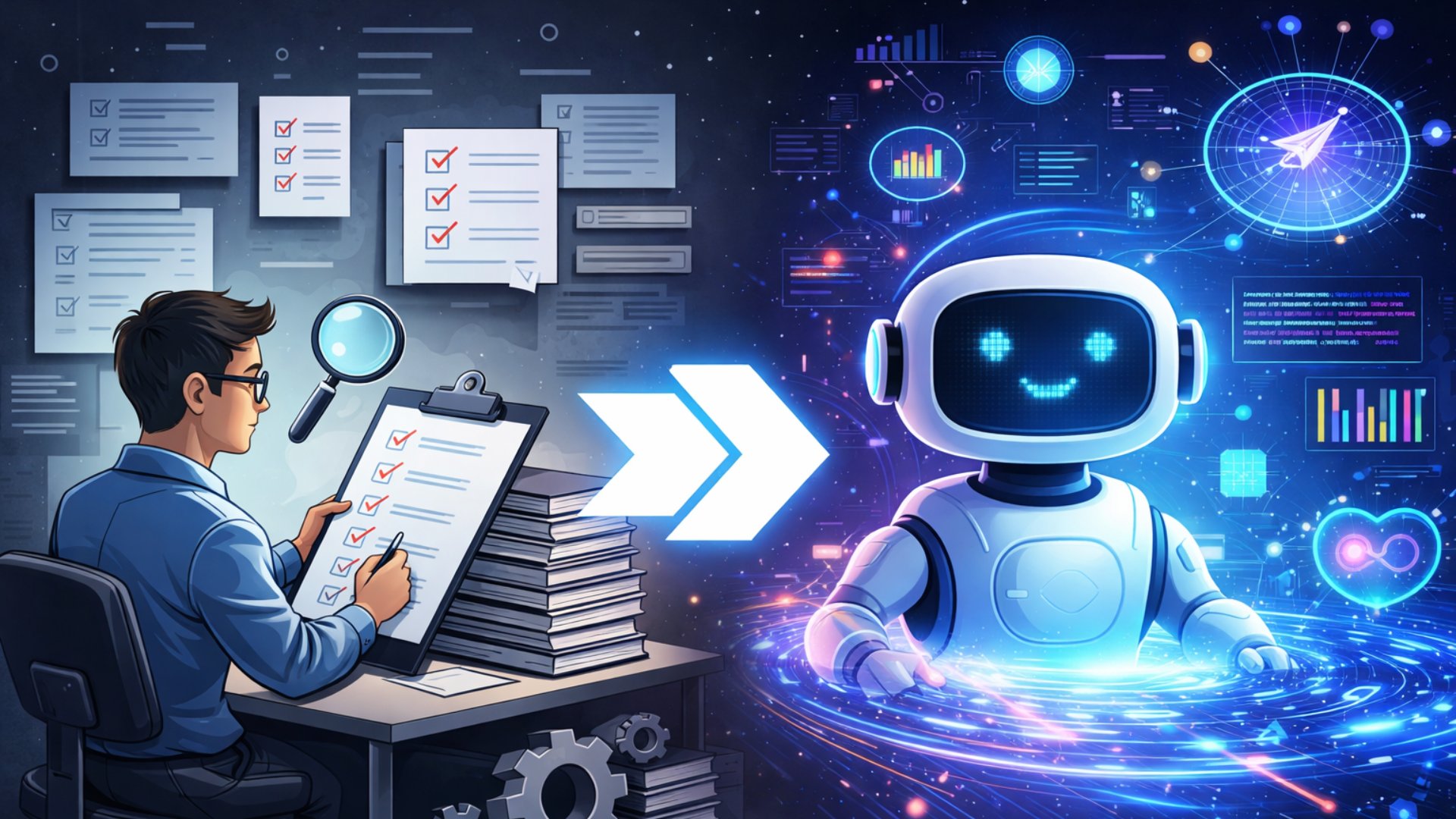
Many teams still approach AI testing the same way they test traditional software.
They:
- Define one “correct” answer
This worked before.
But in AI systems, this approach quickly breaks down.
Because the question is no longer:
“Did we get the exact expected output?”
The question becomes:
“Did we get an output that is acceptable?”
The Reality of GenAI: Variability Is Normal
In AI systems, variation is not always a failure.
- The same answer can be expressed in different ways
- Multiple responses can still be correct
- Slight differences may still solve the user’s problem
But that variability becomes risky when:
That’s why testing AI is no longer about exact wording.
It is about acceptable behavior.
What You Should Be Testing Instead
If outputs are not fixed, your testing criteria must evolve.
Instead of checking for one perfect answer, teams should evaluate:
- Factual correctness → Is it accurate within a defined threshold?
- Safety and compliance → Does it follow policies and avoid harmful outputs?
- Tone and brand alignment → Does it sound like your organization?
- Intent resolution → Did it actually solve the user’s problem?
- Consistency → Does it behave reliably across multi-turn conversations?
This is a shift from exactness → acceptability.
Why Manual Testing Breaks at Scale
Many teams try to solve this with manual review.
But manual testing cannot keep up with:
- Vague or unpredictable inputs
- Long, multi-turn conversations
- Frequent updates (models, prompts, data, integrations)
Even if you review hundreds of cases, real users will always find more.
That is where risk starts to grow.
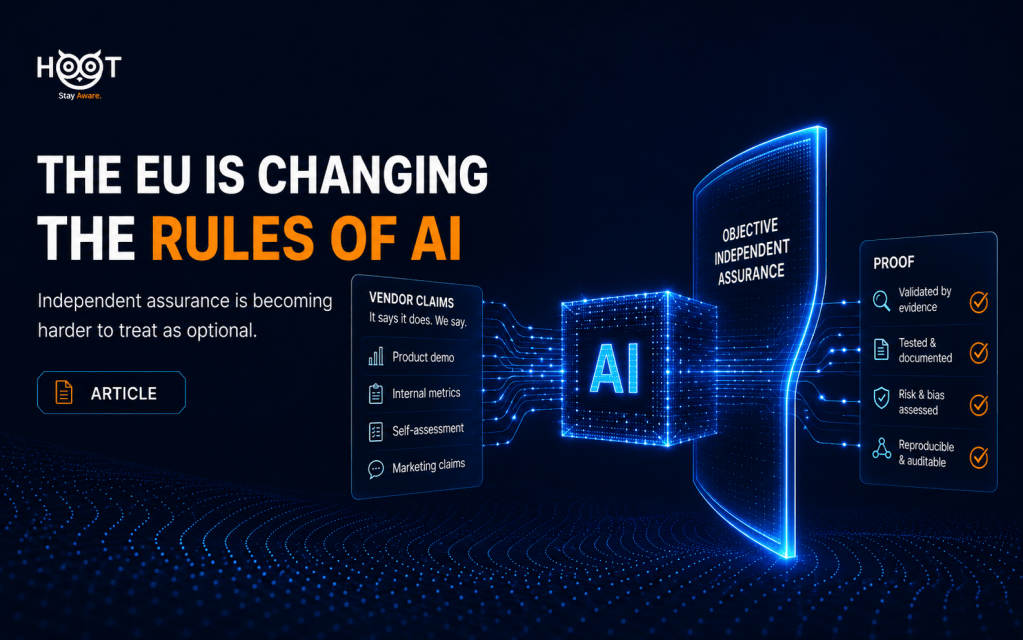
Why Automation Is No Longer Optional
To handle AI systems properly, testing must scale with variability.
Automation allows teams to:
- Run the same scenarios repeatedly
- Measure how often outputs meet acceptable standards
- Catch regressions early — even when code hasn’t changed
- Compare performance across versions
- Move from pass/fail → scores, trends, and risk signals
This is how teams build confidence in systems that are not fully predictable.
The Real Shift: From Perfect Answers to Reliable Behavior
The biggest mindset shift is this:
You are no longer testing for one “perfect” answer.
You are testing whether the system:
- Stays within acceptable bounds
That is how AI quality should be defined in production.
How Hoot Helps
At Hoot, we help teams move beyond traditional testing approaches.
We work with organizations to:
- Measure AI performance across real-world scenarios
- Define thresholds for quality, safety, and compliance
- Automate evaluation and monitoring
- Detect risks before they reach users
So even as your AI systems evolve, your quality stays stable, reliable, and production-ready.
Final Thought
If expected output is no longer fixed,
then testing cannot stay fixed either.
The question is no longer:
“Is this the right answer?”
It is:
“Is this a safe, reliable, and acceptable answer at scale?”
If you are already deploying AI into production,
how are you handling this shift today?